Close

sterile insect technique

New scientific publications advance genetic and microbiome-based pest control

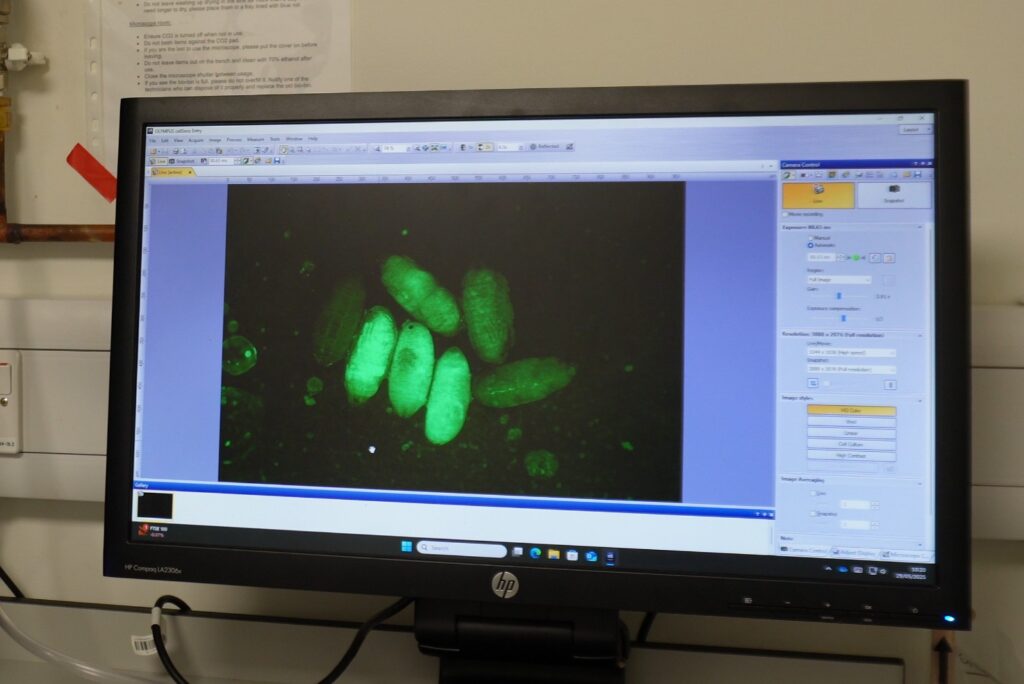
Larvae on Monitor

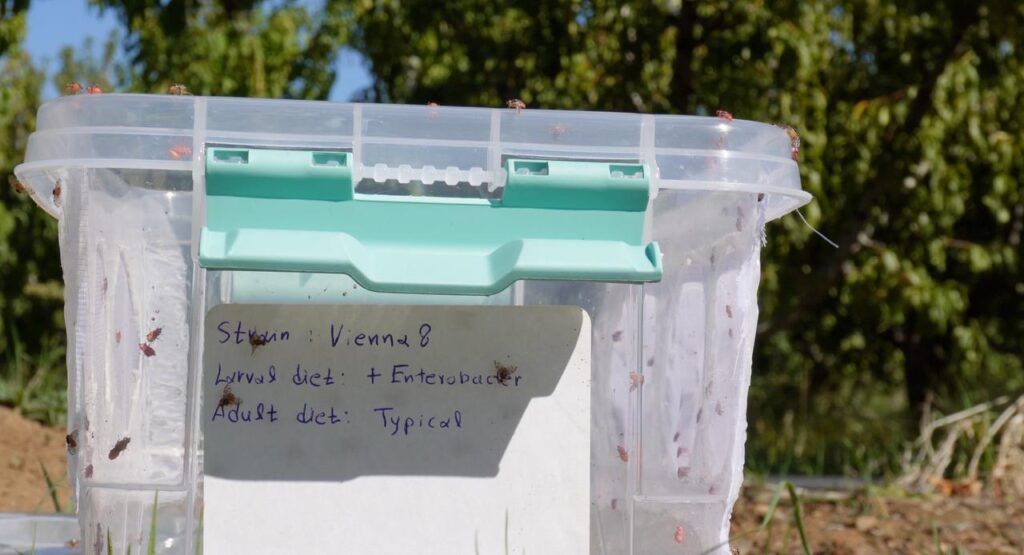
Two new REACT-linked studies highlight major advances in sustainable pest control. One introduces a stable CRISPR-based genetic sexing strain for Mediterranean fruit fly SIT programmes, while the other uncovers host-specific microbiome dynamics in Enterobacter, opening new opportunities for microbiome-enhanced insect management.

Read More

From Random Mutations to Precision Tools: The “Neoclassical” Future of Insect Control

Computer Screenshot

A new “neoclassical” genetic strategy is redefining how Genetic Sexing Strains are built for the Sterile Insect Technique. By integrating CRISPR/Cas9 editing, comparative genomics and targeted gene-rescue systems, researchers demonstrate a faster and more precise path to creating reliable sex-specific markers. This rational, design-driven approach overcomes the limits of traditional random mutagenesis, opening the door to scalable, cross-species GSS development for both agricultural pests and disease-carrying vectors.

Read More

White Pupae for Green Fields: How CRISPR Is Transforming Fruit Fly Control

Citrus Orchards

CRISPR gene editing is opening new possibilities for sustainable pest control. A recent study demonstrates how disrupting a single gene—the white pupae (wp) gene—creates visible, stable white-pupae mutants in three major Bactrocera fruit fly species. These mutants make early sex separation easier and more reliable, strengthening the efficiency of Sterile Insect Technique programs. By enabling a cross-species, insecticide-free approach to population suppression, the work marks a significant step toward greener agricultural protection.

Read More

Field Notes from South Africa: Learning from a Country at the Frontline of Fruit Fly Management

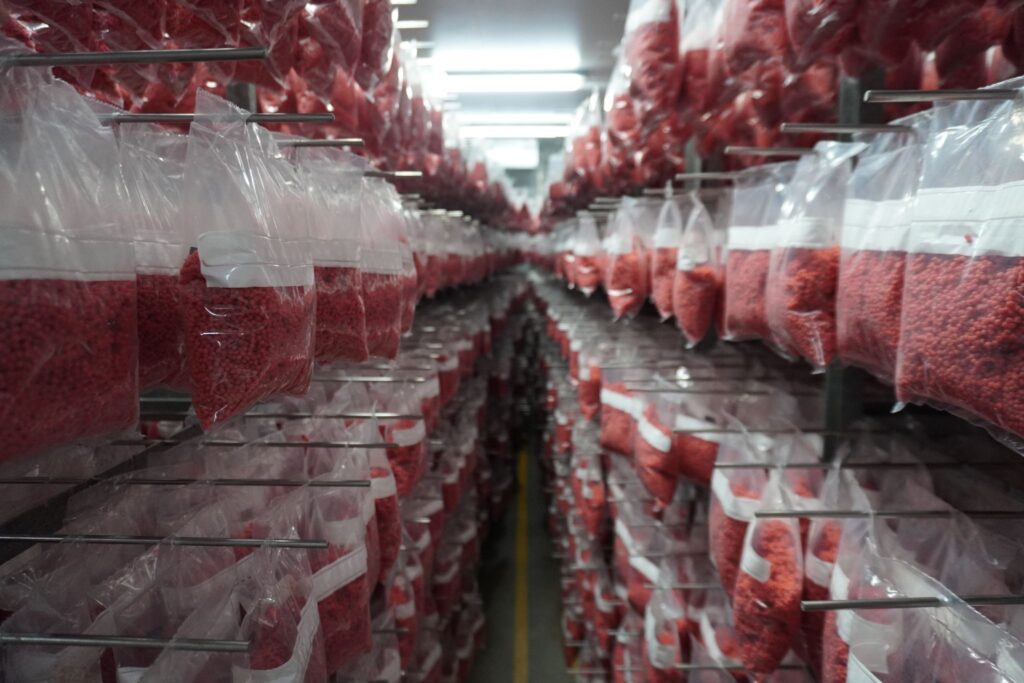
Rearing Facility

South Africa plays a key role in the EU-funded REACT project, serving both as a testing ground and a model for managing invasive fruit flies. With regions facing different levels of infestation by Bactrocera dorsalis, the country offers vital insights into containment and eradication strategies. REACT develops the Sterile Insect Technique (SIT), an environmentally friendly approach that suppresses pest populations through sterile male releases. Beyond technology, the project focuses on economic and social acceptance, involving farmers and industry stakeholders through workshops led by Citrus Research International. Lessons learned in South Africa will shape fruit fly management across Europe, showing how science and practice can unite against a global agricultural threat.

Read More

REACT Engages Media in Naousa to Showcase Localised SIT Strategy

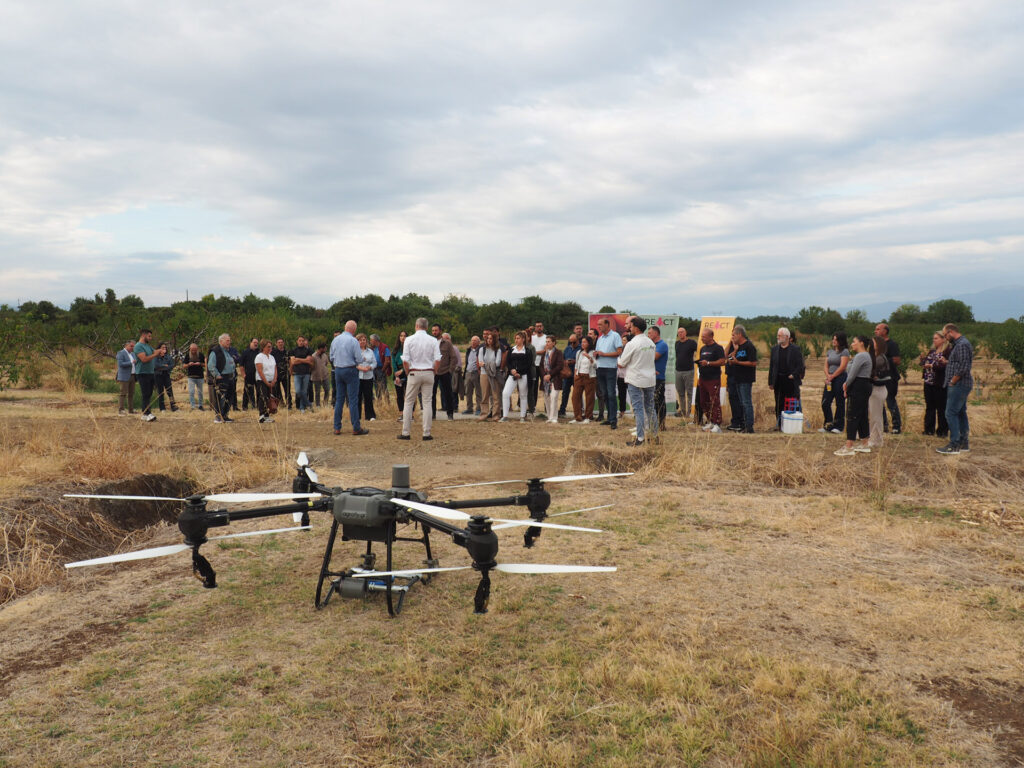
In early September 2025, REACT hosted international journalists in Naousa, Greece, to showcase its localized Sterile Insect Technique (SIT) strategy against invasive Mediterranean fruit flies. Through hands-on demonstrations—from small-scale rearing to molecular diagnostics—the event highlighted how SIT can be adapted to Europe’s diverse fruit-growing regions. Led by experts from the Universities of Thessaly, Giessen, and Patras, the visit generated strong media coverage across Europe, positioning REACT as a model for integrating plant-health innovation with proactive science communication.

Read More

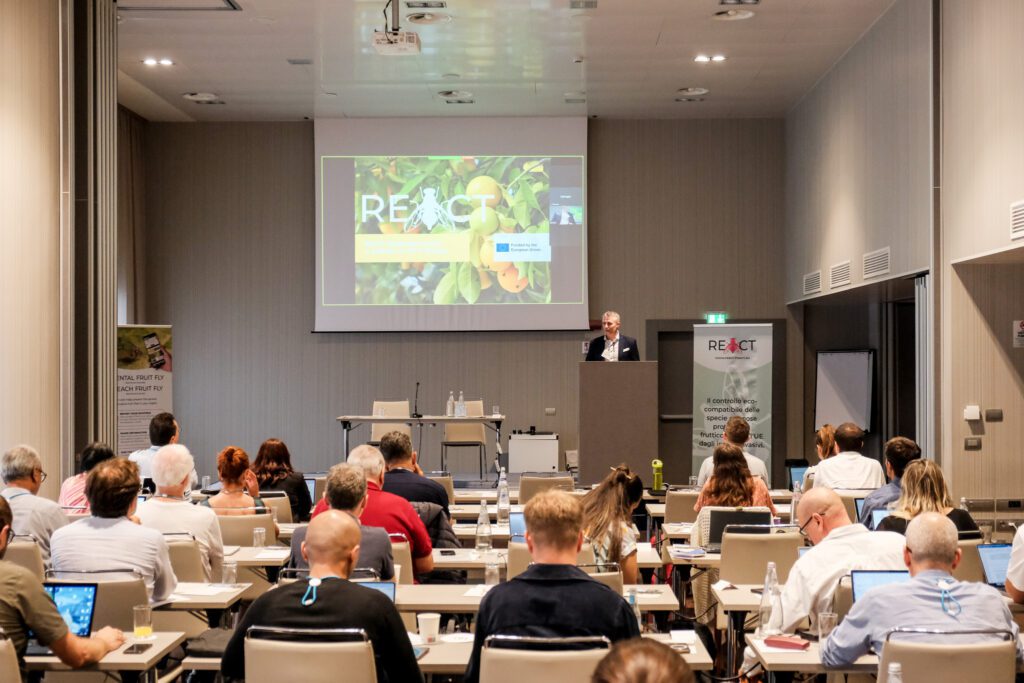
REACT Stakeholder Meeting in Parma: Innovation, Regulation and the Future of SIT

A groundbreaking study by Aumann et al. (2025) reveals the genetic foundation of temperature-sensitive lethality (tsl) in the Mediterranean fruit fly (Ceratitis capitata), a key trait in the Sterile Insect Technique (SIT) for pest control. By identifying a single-point mutation in the Lysyl-tRNA synthetase (LysRS) gene through genome analysis and CRISPR/Cas9 editing, researchers replicated and reversed the tsl effect. These findings open the door to applying tsl-based genetic sexing in other pest species, offering a sustainable, DNA-neutral approach to species-specific population control.

Read More

A Genetic Milestone for Pest Control: New Insights into Temperature-Sensitive Lethality in Medfly

Mediterranean fruit fly

A groundbreaking study by Aumann et al. (2025) reveals the genetic foundation of temperature-sensitive lethality (tsl) in the Mediterranean fruit fly (Ceratitis capitata), a key trait in the Sterile Insect Technique (SIT) for pest control. By identifying a single-point mutation in the Lysyl-tRNA synthetase (LysRS) gene through genome analysis and CRISPR/Cas9 editing, researchers replicated and reversed the tsl effect. These findings open the door to applying tsl-based genetic sexing in other pest species, offering a sustainable, DNA-neutral approach to species-specific population control.

Read More

New Study Enhances Local Planning for Sterile Insect Technique

Article

A new open-access study, supported by the REACT Horizon Europe project, introduces an advanced decision-support system for fine-scale planning of the Sterile Insect Technique (SIT) against Mediterranean fruit flies. By enhancing the PESTonFARM model, researchers Slawomir A. Lux and Marco Colacci enable localized simulations using real-world data from Greece. Their findings show how topography, fruit distribution, and release methods affect SIT success—offering critical guidance for pest control in complex agricultural landscapes.

Read More

Exploring Metabolomics for One Health: REACT Highlights from the Metabolomics Academy

Conference

The Metabolomics Academy, hosted by CNR’s Institute of Bioinformatics and Structural Biology, offered a deep dive into metabolomics through a One Health lens. Among the highlights was Marcella Bonanomi’s presentation on the REACT project, detailing metabolite extraction techniques in tephritid fruit flies and their implications for pest control via the Sterile Insect Technique. The event fostered dialogue between emerging scientists and seasoned researchers, reinforcing the role of metabolomics in addressing interconnected health challenges.

Read More
Call for Abstracts

10th IOBC-WPRS Working Group Meeting

Innovative Pest Control: Shaping the Future of Sustainable Agriculture

10th IOBC-WPRS Working Group Meeting

DATE

22.–24. Nov 2026

LOCATION

OAC, Chania, Kreta

The IOBC-WPRS Working Group “Modern Biotechnology in Integrated Plant Production” invites you to a joint meeting held in collaboration with the EU-funded project REACT.

Submit your abstract now →

MORE INFORMATION: iobc-wprs.react-insect.eu