
All images © 2026 Oikoplus
Sterile Flies from the Sky: REACT Demonstrates Its Medfly Pilot in Naoussa
05 October 2026
Partners and local growers meet in northern Greece to review progress and see a drone release of sterile insects.
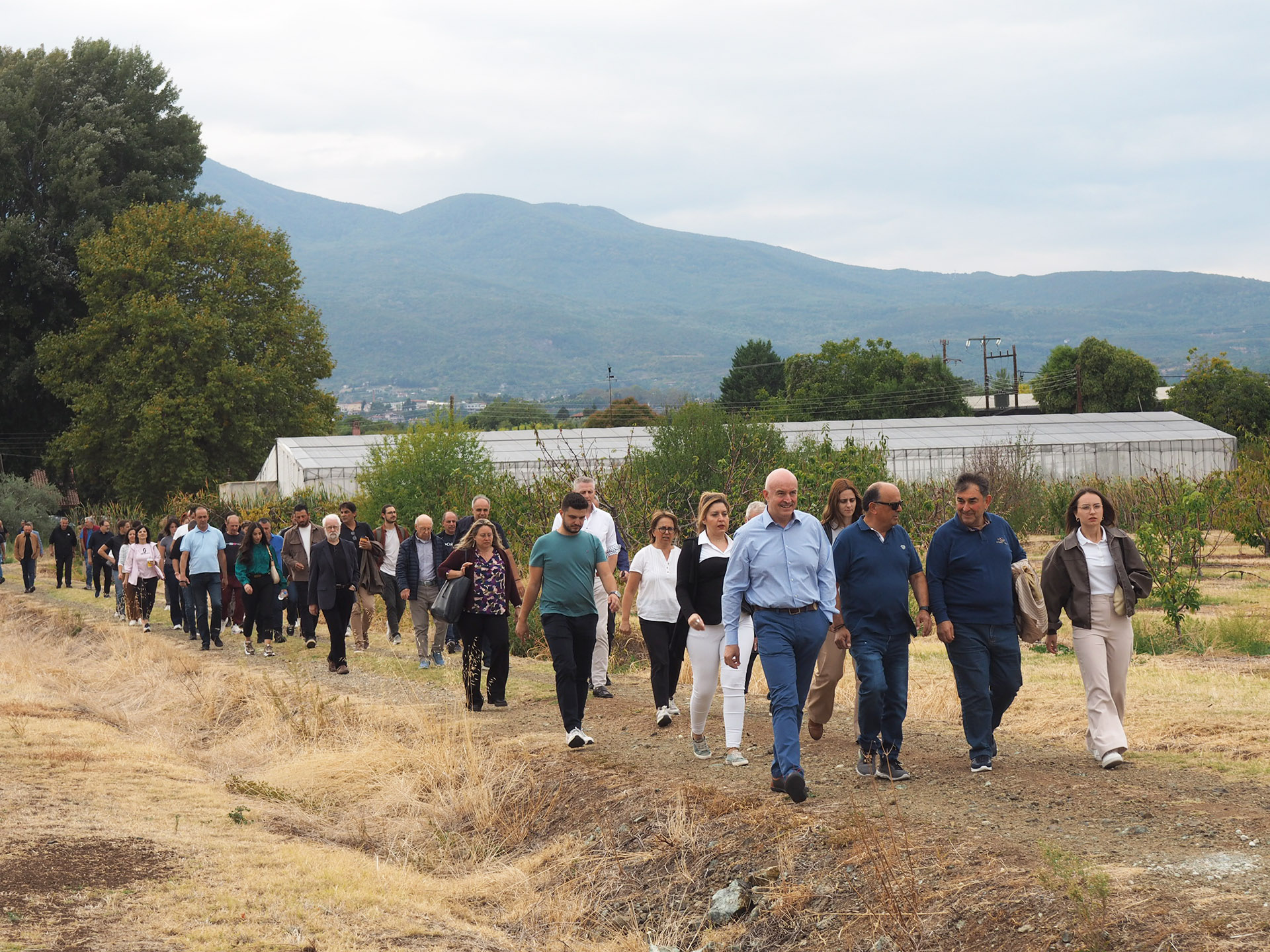
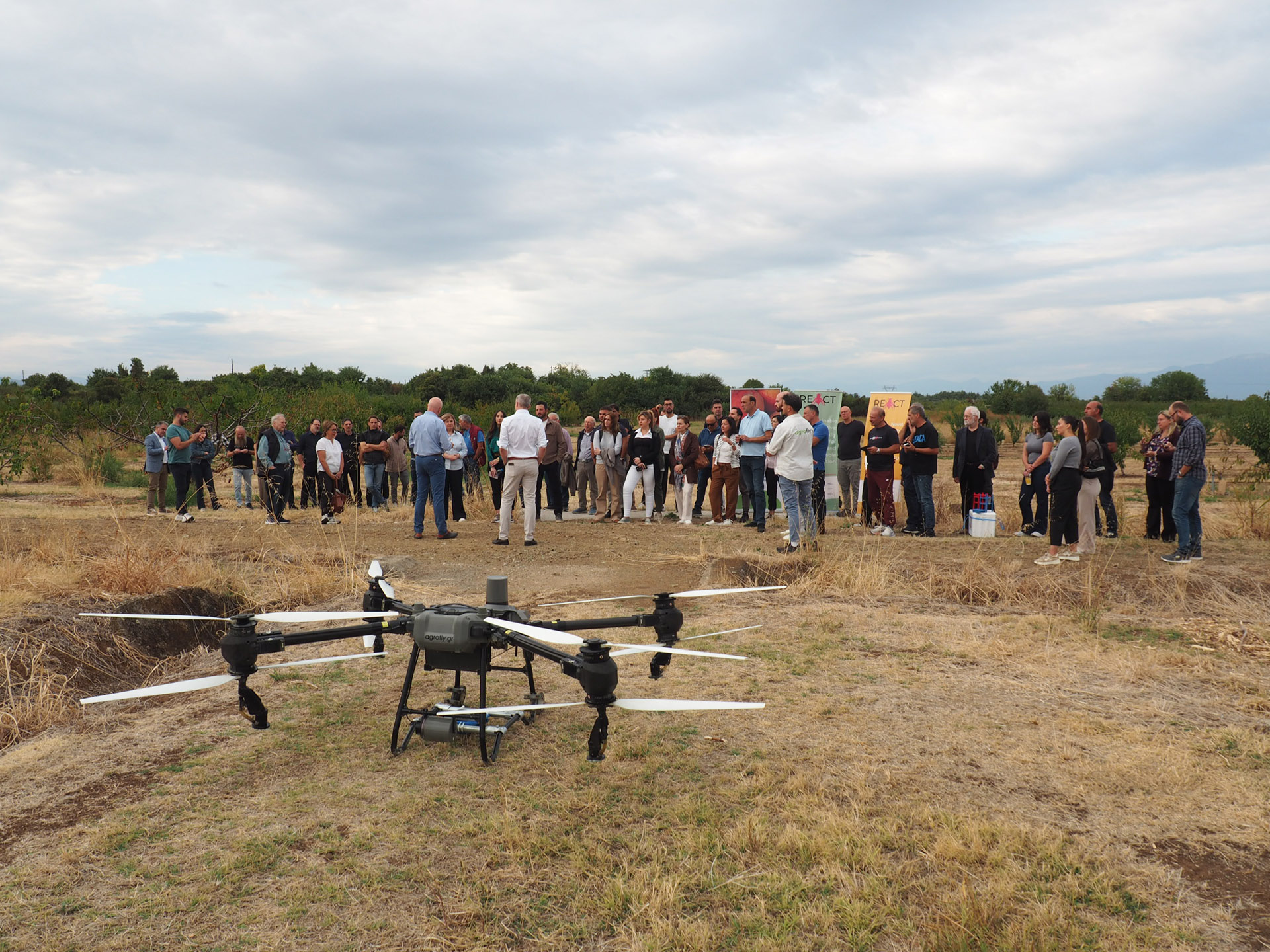
Naoussa lies about 70 kilometres west of Thessaloniki, where the plain gives way to the Vermio mountains. On a clear day you can see all the way to Thessaloniki. The area is known for its vineyards and orchards of peaches, apples and persimmons, and it is also the setting for REACT’s most important field trial. In late September, the project partners met here to review the progress. Around 50 farmers and agricultural professionals from the region then watched a demonstration of sterile Mediterranean fruit fly (Medfly, Ceratitis capitata) releases by drone.
Why Medfly, and why Naoussa?
The Sterile Insect Technique (SIT) works by releasing large numbers of sterilised males. They mate with wild females, which then produce no offspring, so the pest population shrinks over time without conventional insecticide. REACT uses Medfly as a model species to develop and test a small-scale SIT response. The aim is to show how such an approach could support early action against newly arriving invasive fruit flies like Bactrocera dorsalis and Bactrocera zonata under the conditions of typically European small-scale farming. Naoussa suits the trial because Medfly populations are generally low here and peak late in the season. Monitoring since 2019 has produced a long and valuable dataset, now covering around 150 trapping stations across the valley.
From Patras to the orchard
The sterile flies come from a small rearing facility in Patras, built up within the project from almost no national capacity. A partner hospital in Patras sterilises the pupae by X-ray. The insects then travel to Naoussa for release. Production currently stands at roughly 180,000 to 200,000 pupae per week. This season the weekly quantity is split into two releases, early and late in the week, across one larger orchard plot and three smaller, isolated ones. Isolation matters because sterile males cannot do their job if fertile flies keep arriving from neighbouring orchards.
Taking stock of the REACT advances
In an internal work meeting before the demonstration, the REACT team covered various topics and challenges. A field operation is not a laboratory experiment, because plots differ in size, fruit varieties, timing of ripening and surroundings. The team therefore combines several lines of evidence: Reference orchards, historical data from the same plots, the wider trapping network, fruit sampling and records of pesticide use. Partners stressed that the final reports should distinguish clearly between carrying out the operation and demonstrating its biological effect, and should state the limits of the evidence openly.
Telling released flies from wild ones is not as easy as expected in the first place. Fluorescent dye is used to mark sterile flies, but a share of them show weak colour or none. Captured flies are therefore also checked by molecular analysis, so that wild flies can be told apart reliably.
Partners reported encouraging results from adding Enterobacter bacteria as a supplement to the larval diet. These include faster development, more stable production and better mating competitiveness in field-cage tests. The next step is to quantify what this means in practice and whether better-performing males could allow fewer flies to be released.
Another topic that was discussed was the modelling of fly populations and invasion spreads. Simulations show that SIT can strongly reduce female numbers in treated plots. They also show that the ripening period of the local fruit varieties strongly affects the outcome, which is why control sites must be chosen with great care.
The drone demonstration
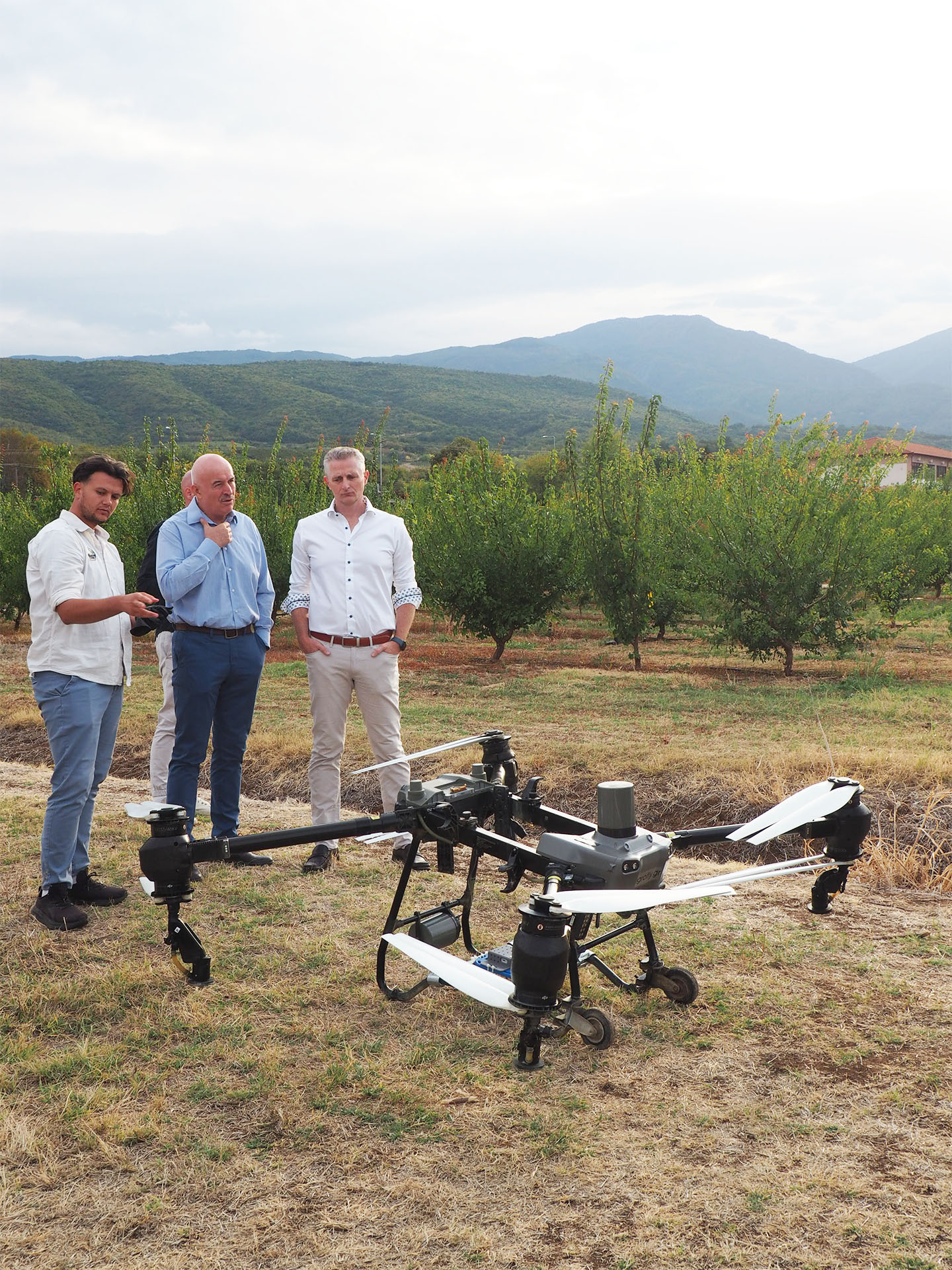
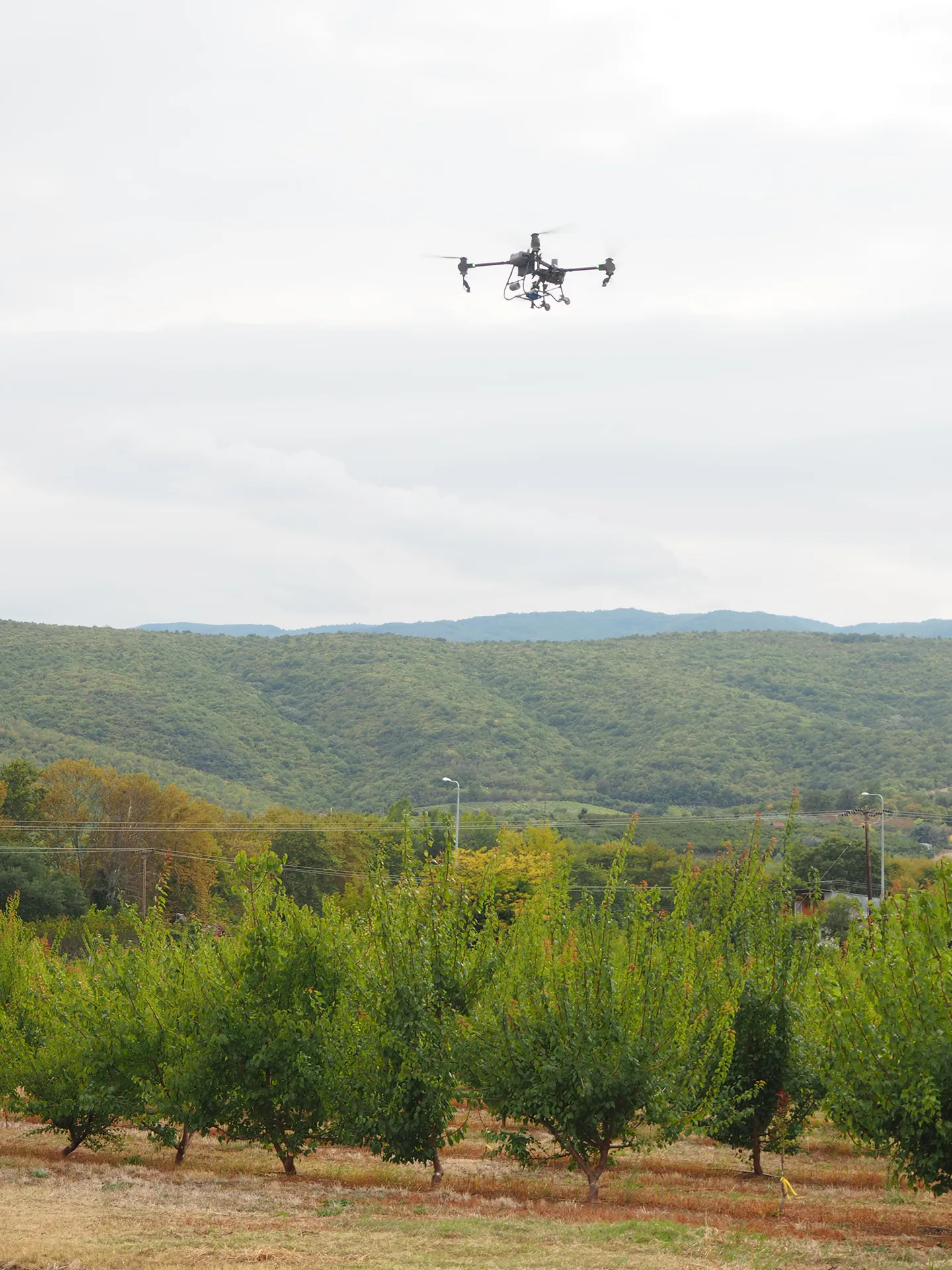
The demonstration took place at the Institute of Plant Breeding and Genetic Resources of ELGO-DIMITRA, a branch of the Hellenic Agricultural Organization in Naoussa. Until now, sterile flies in the trial have been released by distributing bags of flies across the orchard. The drone offers an alternative.
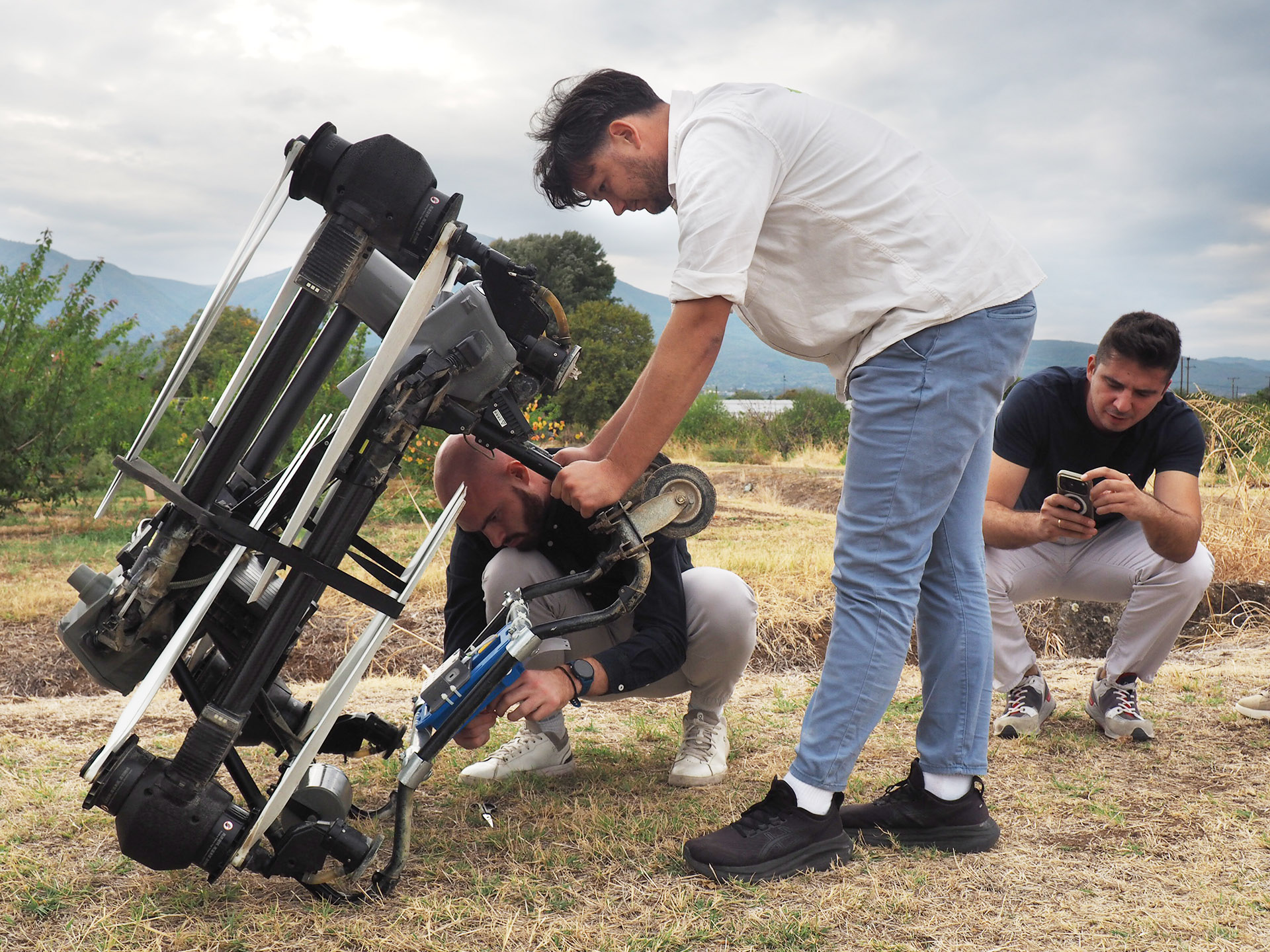
The large drone, which can carry a payload of up to 50 kilograms, was fitted with a custom-made, 3D-printed container holding 18 small cases of 500 flies each. During flight, a mechanism slowly pulls a transparent foil cover away from the openings, so the flies leave the cases gradually rather than all at once. This lets them spread evenly over the orchard.
The drone can cover up to 4 hectares per hour, depending on the terrain. In agriculture, drones like this are usually used to spread fertiliser. Compared with a tractor, a drone needs at least half the time and less fertiliser. For sterile insects, the main advantage is the even distribution, along with the speed and the ability to reach difficult ground. All of this would matter for any future area-wide programme.
A message for growers and decision-makers
The Naoussa meeting concluded with a public project presentation followed by a round-table discussion with researchers. It gave a balanced message. Sterile insect releases can suppress Medfly under suitable conditions, especially in isolated orchards, and may reduce the need for targeted pesticide use. They are not a stand-alone solution, however. Neighbouring untreated orchards, late-ripening varieties and the lack of a coordinated programme can all limit success. Lasting results would call for area-wide cooperation, reliable monitoring, a clear framework of rules and secure long-term financing. Partners also pointed to the growing threat of invasive fruit flies and the importance of early detection and rapid response.
With the field season still running and the final evaluation ahead, Naoussa will help show what small-scale SIT can achieve, and where its limits lie, in protecting European orchards from fruit flies.